Đăng Nhập
Đăng nhập iSach
Đăng nhập = Google
Quên Mật Khẩu
Đăng ký
Trang chủ
Đăng nhập
Đăng nhập iSach
Đăng nhập = Google
Đăng ký
Tùy chỉnh (beta)
Nhật kỳ....
Ai đang online
Ai đang download gì?
Top đọc nhiều
Top download nhiều
Top mới cập nhật
Top truyện chưa có ảnh bìa
Truyện chưa đầy đủ
Danh sách phú ông
Danh sách phú ông trẻ
Trợ giúp
Download ebook mẫu
Đăng ký / Đăng nhập
Các vấn đề về gạo
Hướng dẫn download ebook
Hướng dẫn tải ebook về iPhone
Hướng dẫn tải ebook về Kindle
Hướng dẫn upload ảnh bìa
Quy định ảnh bìa chuẩn
Hướng dẫn sửa nội dung sai
Quy định quyền đọc & download
Cách sử dụng QR Code
Truyện
Truyện Ngẫu Nhiên
Giới Thiệu Truyện Tiêu Biểu
Truyện Đọc Nhiều
Danh Mục Truyện
Kiếm Hiệp
Tiên Hiệp
Tuổi Học Trò
Cổ Tích
Truyện Ngắn
Truyện Cười
Kinh Dị
Tiểu Thuyết
Ngôn Tình
Trinh Thám
Trung Hoa
Nghệ Thuật Sống
Phong Tục Việt Nam
Việc Làm
Kỹ Năng Sống
Khoa Học
Tùy Bút
English Stories
Danh Mục Tác Giả
Kim Dung
Nguyễn Nhật Ánh
Hoàng Thu Dung
Nguyễn Ngọc Tư
Quỳnh Dao
Hồ Biểu Chánh
Cổ Long
Ngọa Long Sinh
Ngã Cật Tây Hồng Thị
Aziz Nesin
Trần Thanh Vân
Sidney Sheldon
Arthur Conan Doyle
Truyện Tranh
Sách Nói
Danh Mục Sách Nói
Đọc truyện đêm khuya
Tiểu Thuyết
Lịch Sử
Tuổi Học Trò
Đắc Nhân Tâm
Giáo Dục
Hồi Ký
Kiếm Hiệp
Lịch Sử
Tùy Bút
Tập Truyện Ngắn
Giáo Dục
Trung Nghị
Thu Hiền
Bá Trung
Mạnh Linh
Bạch Lý
Hướng Dương
Dương Liễu
Ngô Hồng
Ngọc Hân
Phương Minh
Shep O’Neal
Thơ
Thơ Ngẫu Nhiên
Danh Mục Thơ
Danh Mục Tác Giả
Nguyễn Bính
Hồ Xuân Hương
TTKH
Trần Đăng Khoa
Phùng Quán
Xuân Diệu
Lưu Trọng Lư
Tố Hữu
Xuân Quỳnh
Nguyễn Khoa Điềm
Vũ Hoàng Chương
Hàn Mặc Tử
Huy Cận
Bùi Giáng
Hồ Dzếnh
Trần Quốc Hoàn
Bùi Chí Vinh
Lưu Quang Vũ
Bảo Cường
Nguyên Sa
Tế Hanh
Hữu Thỉnh
Thế Lữ
Hoàng Cầm
Đỗ Trung Quân
Chế Lan Viên
Lời Nhạc
Trịnh Công Sơn
Quốc Bảo
Phạm Duy
Anh Bằng
Võ Tá Hân
Hoàng Trọng
Trầm Tử Thiêng
Lương Bằng Quang
Song Ngọc
Hoàng Thi Thơ
Trần Thiện Thanh
Thái Thịnh
Phương Uyên
Danh Mục Ca Sĩ
Khánh Ly
Cẩm Ly
Hương Lan
Như Quỳnh
Đan Trường
Lam Trường
Đàm Vĩnh Hưng
Minh Tuyết
Tuấn Ngọc
Trường Vũ
Quang Dũng
Mỹ Tâm
Bảo Yến
Nirvana
Michael Learns to Rock
Michael Jackson
M2M
Madonna
Shakira
Spice Girls
The Beatles
Elvis Presley
Elton John
Led Zeppelin
Pink Floyd
Queen
Sưu Tầm
Toán Học
Tiếng Anh
Tin Học
Âm Nhạc
Lịch Sử
Non-Fiction
Download ebook?
Chat
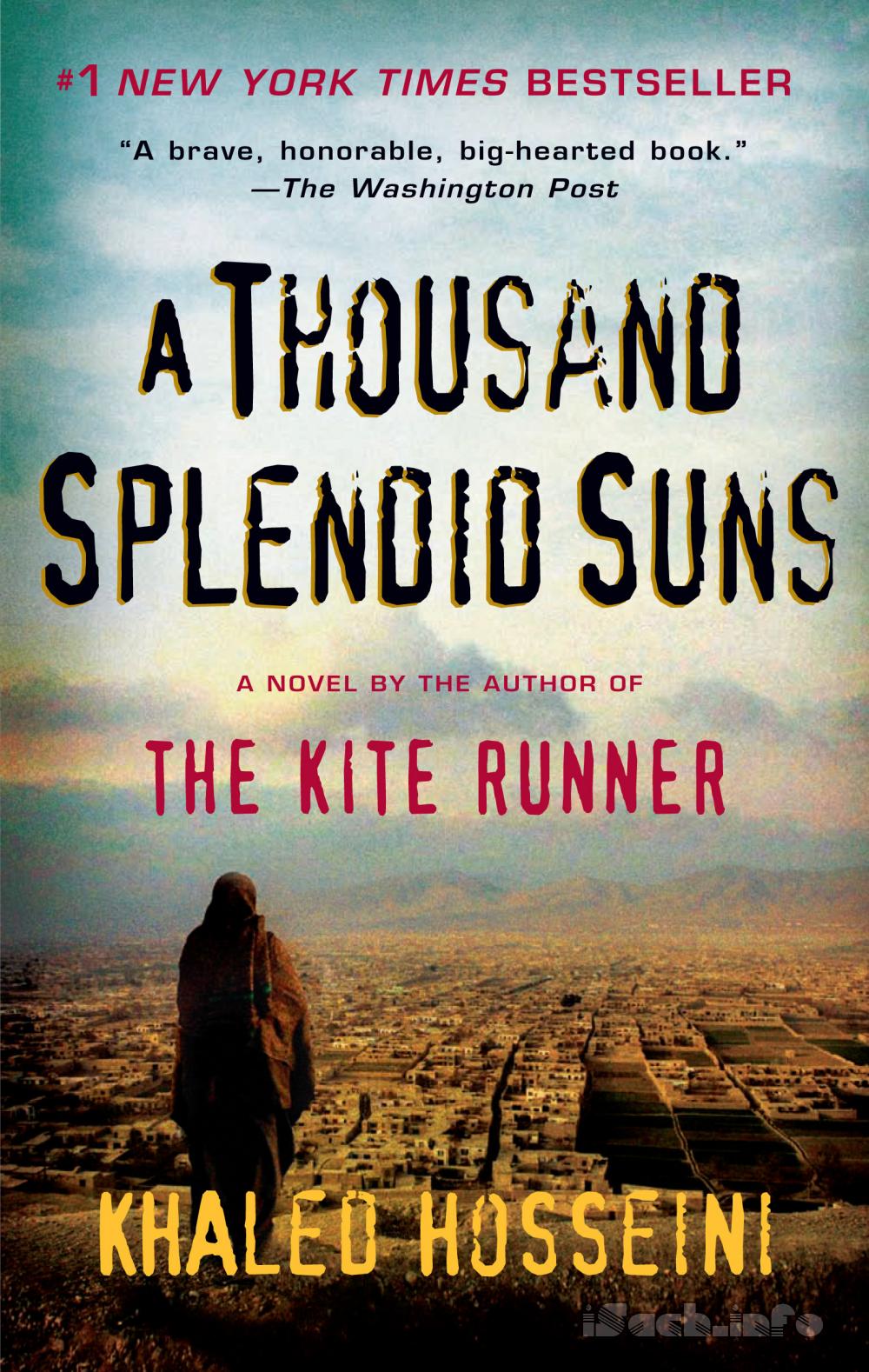
A Thousand Splendid
ePub
A4
A5
A6
Chương trước
Mục lục
Chương sau
Chapter 1
PART ONE
Mariam was five years old the first time she heard the word harami.
It happened on a Thursday. It must have, because Mariam remembered that she had been restless and preoccupied that day, the way she was only on Thursdays, the day when Jalil visited her at the kolba. To pass the time until the moment that she would see him at last, crossing the knee-high grass in the clearing and waving, Mariam had climbed a chair and taken down her mother's Chinese tea set. The tea set was the sole relic that Mariam's mother, Nana, had of her own mother, who had died when Nana was two. Nana cherished each blue-and-white porcelain piece, the graceful curve of the pot's spout, the hand-painted finches and chrysanthemums, the dragon on the sugar bowl, meant to ward off evil.
It was this last piece that slipped from Mariam's fingers, that fell to the wooden floorboards of the kolba and shattered.
When Nana saw the bowl, her face flushed red and her upper lip shivered, and her eyes, both the lazy one and the good, settled on Mariam in a flat, unblinking way. Nana looked so mad that Mariam feared the jinn would enter her mother's body again. But the jinn didn't come, not that time. Instead, Nana grabbed Mariam by the wrists, pulled her close, and, through gritted teeth, said, "You are a clumsy little harami. This is my reward for everything I've endured. An heirloom-breaking, clumsy little harami."
At the time, Mariam did not understand. She did not know what this word harami - bastard - meant. Nor was she old enough to appreciate the injustice, to see that it is the creators of the harami who are culpable, not the harami, whose only sin is being born. Mariam did surmise, by the way Nana said the word, that it was an ugly, loathsome thing to be a harami, like an insect, like the scurrying cockroaches Nana was always cursing and sweeping out of the kolba.
Later, when she was older, Mariam did understand. It was the way Nana uttered the word - not so much saying it as spitting it at her - that made Mariam feel the full sting of it. She understood then what Nana meant, that a harami was an unwanted thing; that she, Mariam, was an illegitimate person who would never have legitimate claim to the things other people had, things such as love, family, home, acceptance.
Jalil never called Mariam this name. Jalil said she was his little flower. He was fond of sitting her on his lap and telling her stories, like the time he told her that Herat, the city where Mariam was born, in 1959, had once been the cradle of Persian culture, the home of writers, painters, and Sufis.
"You couldn't stretch a leg here without poking a poet in the ass," he laughed. Jalil told her the story of Queen Gauhar Shad, who had raised the famous minarets as her loving ode to Herat back in the fifteenth century. He described to her the green wheat fields of Herat, the orchards, the vines pregnant with plump grapes, the city's crowded, vaulted bazaars.
"There is a pistachio tree," Jalil said one day, "and beneath it, Mariam jo, is buried none other than the great poet Jami." He leaned in and whispered, "Jami lived over five hundred years ago. He did. I took you there once, to the tree. You were little. You wouldn't remember."
It was true. Mariam didn't remember. And though she would live the first fifteen years of her life within walking distance of Herat, Mariam would never see this storied tree. She would never see the famous minarets up close, and she would never pick fruit from Herat's orchards or stroll in its fields of wheat. But whenever Jalil talked like this, Mariam would listen with enchantment. She would admire Jalil for his vast and worldly knowledge. She would quiver with pride to have a father who knew such things.
"What rich lies!" Nana said after Jalil left. "Rich man telling rich lies. He never took you to any tree. And don't let him charm you. He betrayed us, your beloved father. He cast us out. He cast us out of his big fancy house like we were nothing to him. He did it happily." Mariam would listen dutifully to this. She never dared say to Nana how much she disliked her talking this way about Jalil. The truth was that around Jalil, Mariam did not feel at all like a harami. For an hour or two every Thursday, when Jalil came to see her, all smiles and gifts and endearments, Mariam felt deserving of all the beauty and bounty that life had to give. And, for this, Mariam loved Jalil.
Even if she had to share him.
Jalil had three wives and nine children, nine legitimate children, all of whom were strangers to Mariam. He was one of Herat's wealthiest men. He owned a cinema, which Mariam had never seen, but at her insistence Jalil had described it to her, and so she knew that the façade was made of blue-and-tan terra-cotta tiles, that it had private balcony seats and a trellised ceiling. Double swinging doors opened into a tiled lobby, where posters of Hindi films were encased in glass displays. On Tuesdays, Jalil said one day, kids got free ice cream at the concession stand.
Nana smiled demurely when he said this. She waited until he had left the kolba, before snickering and saying, "The children of strangers get ice cream. What do you get, Mariam? Stories of ice cream."
In addition to the cinema, Jalil owned land in Karokh, land in Farah, three carpet stores, a clothing shop, and a black 1956 Buick Roadmaster. He was one of Herat's best-connected men, friend of the mayor and the provincial governor. He had a cook, a driver, and three housekeepers.
Nana had been one of the housekeepers. Until her belly began to swell.
When that happened, Nana said, the collective gasp of Jalil's family sucked the air out of Herat. His in-laws swore blood would flow. The wives demanded that he throw her out. Nana's own father, who was a lowly stone carver in the nearby village of Gul Daman, disowned her. Disgraced, he packed his things and boarded a bus to Iran, never to be seen or heard from again.
"Sometimes," Nana said early one morning, as she was feeding the chickens outside the kolba, "I wish my father had had the stomach to sharpen one of his knives and do the honorable thing. It might have been better for me." She tossed another handful of seeds into the coop, paused, and looked at Mariam. "Better for you too, maybe. It would have spared you the grief of knowing that you are what you are. But he was a coward, my father. He didn't have the dil, the heart, for it."
Jalil didn't have the dil either, Nana said, to do the honorable thing. To stand up to his family, to his wives and in-laws, and accept responsibility for what he had done. Instead, behind closed doors, a face-saving deal had quickly been struck. The next day, he had made her gather her few things from the servants' quarters, where she'd been living, and sent her off.
"You know what he told his wives by way of defense? That I forced myself on him. That it was my fault. Didi? You see? This is what it means to be a woman in this world." Nana put down the bowl of chicken feed. She lifted Mariam's chin with a finger. "Look at me, Mariam."
Reluctantly, Mariam did.
Nana said, "Learn this now and learn it well, my daughter: Like a compass needle that points north, a man's accusing finger always finds a woman. Always. You remember that, Mariam."
Chương trước
Mục lục
Chương sau
A Thousand Splendid
Khaled Hosseini
A Thousand Splendid - Khaled Hosseini
https://isach.info/story.php?story=a_thousand_splendid__khaled_hosseini